
Karryn’s Prison Screenshots









Karryn’s Prison review
A Deep Dive Into the Innovative Mechanics and Design of This Unique Simulation Experience
Karryn’s Prison stands out as a uniquely designed simulation experience that seamlessly blends management mechanics with character progression and narrative elements. Players take on the role of a new warden managing a notorious all-male correctional facility while navigating complex gameplay systems. The game has garnered attention for its innovative approach to integrating gameplay mechanics with character development, offering players meaningful choices that directly impact the story progression. With its polished blend of simulation elements, strategic management, and engaging mechanics, Karryn’s Prison delivers an experience that goes beyond typical genre conventions. This comprehensive guide explores what makes this game distinctive, its core mechanics, and why it has resonated with players seeking depth and innovation in simulation gaming.
Core Gameplay Mechanics and Systems
Let’s cut straight to the heart of the matter. If you’ve heard anything about Karryn’s Prison, you know it’s not your average management sim. It masquerades as a tough-as-nails prison management simulation game 🏰, where you, as Warden Karryn, are tasked with running a penitentiary full of rowdy inmates. But beneath that spreadsheet-ready surface lies a devilishly clever web of interconnected systems. The real magic—and the reason for its cult status—is how its Karryn’s Prison gameplay mechanics fuse intense management with deep, player-driven narrative. It’s a game about control, in every sense of the word, and what happens when you choose to relinquish it.
This deep dive will peel back the layers on the systems that make this experience so unique. We’re talking about the tense balancing act of management, the infamous character corruption system, and the surprising ways classic JRPG mechanics integration elevates the entire simulation game design. Get ready to see how every choice you make, from hiring a guard to choosing a dialogue option, ripples through your prison and your character.
Understanding the Management and Simulation Systems
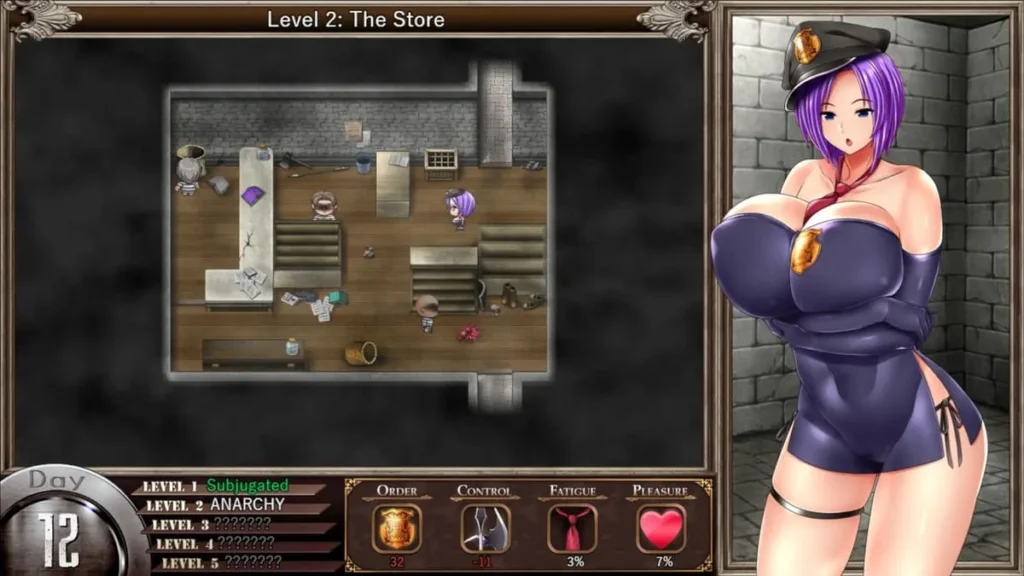
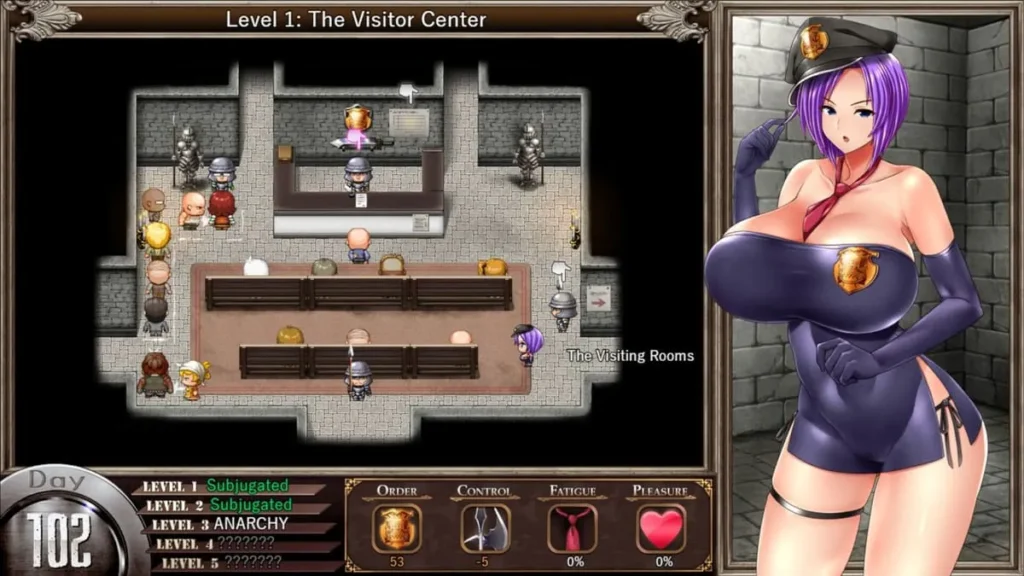
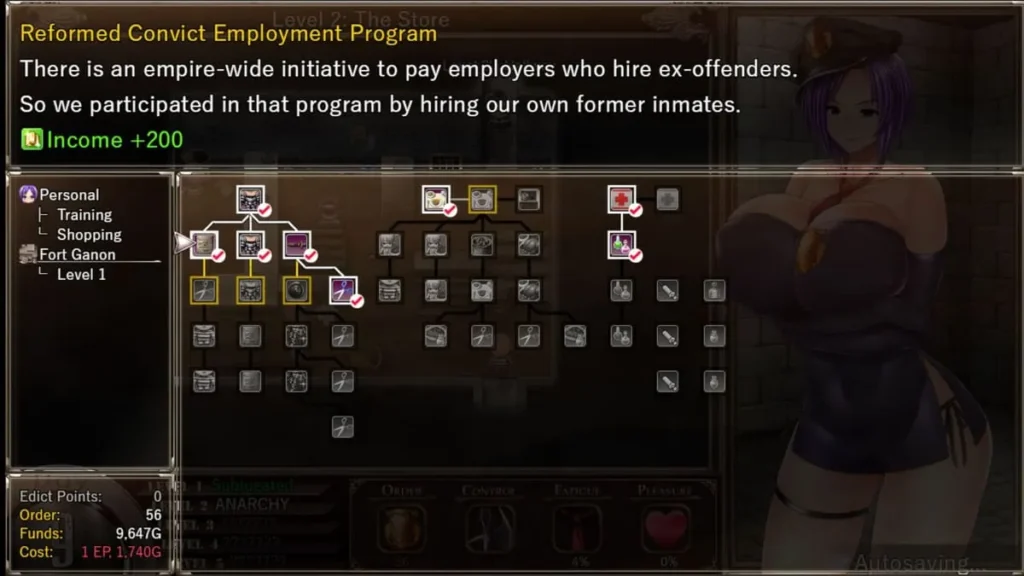
At first glance, the core loop feels familiar to any sim fan. Your days are broken into shifts (Morning, Day, Evening, Night), and you have a daunting to-do list: manage finances, assign staff, upgrade facilities, and keep the peace. Inmates have needs—food, hygiene, recreation—and if you neglect them, their Stress and Rebellion stats skyrocket, leading to riots that can cripple your operations. You’ll be constantly checking reports, balancing the budget for new cells or a better cafeteria, and micromanaging your guards’ patrol routes. It’s a satisfyingly complex prison management simulation game foundation that would stand solidly on its own.
But here’s where the simulation game design takes a sharp turn. Your primary “resource” for managing these hardened criminals isn’t just better walls or more guards—it’s you. Karryn is not a god-like cursor; she is a physical entity in the prison. To issue orders, boost morale, or break up fights, you often need to be there personally. This creates a brilliant, constant tension. Do you spend your afternoon in the office reviewing budgets, or do you walk the yard to personally settle disputes and lower inmate Stress?
The UI and pacing are masterfully tuned to this tension. The game uses a passive progress system for many tasks. Start an upgrade on a cell block, and it will complete over several shifts, freeing you up to handle other crises (or create new ones). This isn’t a game about waiting, though; it’s about parallel processing. While the walls are being built, you’re likely dealing with a smuggling ring in the showers or a hungry inmate causing a scene in the cafeteria. This flow ensures you’re always engaged, making strategic choices about where your presence is most critical.
To visualize how these core pillars interact, let’s break them down:
| Core System | Key Features & Mechanics | Player Impact & Strategic Layer |
|---|---|---|
| Management Systems | Shift-based daily cycle; Financial budgeting; Facility construction & upgrades; Staff hiring and assignment; Inmate need management (Food, Hygiene, etc.); Rebellion and Stress meters. | Forces macro-level planning and resource allocation. Your financial and logistical decisions set the stage for everything else. Neglect leads to systemic failure and riots. |
| Character Progression | Karryn’s personal stats (Charm, Combat, Will, etc.); Corruption meter and stages; Unlockable passive and active abilities; Equipment and item management; Relationship levels with inmates and staff. | Directly ties narrative to gameplay. Your management style (strict vs. accommodating) shapes Karryn’s growth. The character corruption system offers an alternate, risk/reward progression path. |
| Strategic Elements | The “Warden’s Presence” dilemma; Prioritizing crises vs. long-term projects; Balancing inmate control methods (force vs. persuasion); Choosing which corruption opportunities to engage with. | Creates moment-to-moment tension and meaningful player choice and agency. Every action has an opportunity cost, making your playthrough uniquely yours. |
This framework isn’t just for show—it’s the engine of your entire experience. A failing financial system limits your ability to buy gear that boosts your Charm, which makes it harder to peacefully resolve conflicts, which increases your reliance on Combat, which might lead you down a certain path… See how it all connects? 🔗
Character Progression and Corruption Mechanics
This is the beating heart of the game and its most celebrated innovation. Forget linear storylines; in Karryn’s Prison, your character sheet is the narrative. Karryn has traditional RPG stats like Charm, Combat, Willpower, and Service. Leveling up these stats isn’t just about getting stronger; it’s about defining your management philosophy and your personal story.
Want to be an iron-fisted warden? Pump points into Combat and Willpower to overpower inmates and resist their advances. Prefer a diplomatic approach? Charm becomes your best weapon, allowing you to talk down rebels and convince inmates to cooperate willingly. Each stat opens new dialogue options and passive abilities, literally changing how you interact with the game world. This deep JRPG mechanics integration ensures that character building is never a disconnected mini-game; it’s the core tool for engaging with the simulation game design.
Now, let’s talk about the elephant in the room: the character corruption system. This is perhaps the most misunderstood aspect of the game. Corruption is not a scripted, inevitable downfall. It is a parallel progression system, entirely driven by player choice and agency.
Here’s how it works: Inmates will constantly test Karryn, making lewd offers or provocative challenges. You can always refuse, bolstering your Willpower and maintaining your “pure” path. But sometimes, accepting these offers has tangible gameplay benefits—a quick reduction in an inmate’s Stress, a valuable item, or a sudden boost to your own stats. The catch? It increases your Corruption meter.
Personal Insight: I remember a playthrough where I was desperately struggling with finances. A notorious inmate offered a huge bribe in exchange for a “favor.” My pure, by-the-books run was on the verge of economic collapse. I had a genuine, strategic dilemma: hold to my principles and risk the prison falling apart, or compromise just once to secure the funds needed for crucial upgrades. I took the bribe. That single choice didn’t end the game; it opened up a new, riskier way to solve problems that I then had to constantly weigh against my original goals.
As Corruption increases, Karryn unlocks new, often more powerful, abilities tied to her deteriorating state. These can make certain management aspects easier or open entirely new interaction options. The game doesn’t punish you for this—it diverges. The story beats, dialogue, and even endings branch based on this meter. This system brilliantly reframes “failure” as an alternative narrative path with its own unique rewards and challenges. You’re not playing to avoid corruption; you’re playing to decide what kind of warden Karryn becomes, and the gameplay mechanics support every possible version of her.
Strategic Decision-Making and Player Agency
If the management is the stage and character progression is the actor, then player choice and agency is the director. Karryn’s Prison is a masterclass in meaningful consequences. This isn’t an illusion of choice; it’s a web of cascading cause and effect that makes every playthrough feel personal. The sandbox gameplay elements are subtle but powerful—there’s no single “right” way to do anything, only a series of trade-offs that define your experience.
The most profound choices come from the intersection of all the systems. Let’s walk through a real scenario:
The Scenario: It’s the Evening shift. You have 100 Gold in the treasury. The kitchen report shows inmate Food satisfaction is dipping dangerously low, which will increase Stress across the prison by morning. Simultaneously, a high-Combat inmate is challenging your authority in the yard, and if you don’t address it, a fight will break out. In your inventory, you have a seductive outfit that would give a +50% Charm bonus but slowly increases Corruption when worn.
The Strategic Crossroads:
* Option A (The Manager): Spend the 100 Gold on immediate food supplies, then go to the yard yourself. Use your base Charm stat to try and talk down the inmate. If it fails, you’ll have to fight, risking injury and losing time.
* Option B (The Corruptor): Ignore the food issue for now. Equip the seductive outfit, go to the yard, and use the massive Charm boost to easily pacify the inmate, possibly even gaining a favor from them. Use the calm you’ve created to maybe pursue a more personally beneficial interaction later that night. The food problem will cause Stress tomorrow, but you can deal with it then—maybe by taking a bribe from the inmate you just pacified to buy supplies.
* Option C (The Autocrat): Don’t spend any gold. Send your toughest guard to brutally suppress the inmate in the yard, which will solve the immediate fight but spike Rebellion in others. Then, use your now-free evening to personally work in the kitchen, using your Service stat to temporarily boost food quality, a stopgap that costs time but no money.
Each option has immediate gameplay consequences (resource drain, stat changes, inmate reactions) and long-term narrative implications (shifting your Corruption path, altering relationship webs). This is the essence of the game’s strategic depth. You are not just managing a prison; you are managing Karryn’s soul, her reputation, and her resources in one relentless, captivating puzzle.
This density of choice is why even an “easy” difficulty run can take around 12 hours. That time isn’t filler—it’s you living with the weight of your decisions, experimenting with systems, and discovering how different builds radically alter the experience. Will you be the unstoppable combat warden who rules through fear? The silver-tongued manipulator who controls through desire? Or a chaotic mix of both, swaying with the needs of the moment? The sandbox gameplay elements mean the tools are all there; the story that emerges is wholly yours.
The genius of Karryn’s Prison gameplay mechanics is that they refuse to be siloed. The management sim feeds the RPG progression, which dictates your strategic options, which in turn shapes the narrative of your prison. It’s a closed loop of player choice and agency that feels incredibly reactive and personal. You’re not just clicking buttons on a management interface; you’re writing a biography through gameplay, one fraught, fascinating decision at a time. That is the mark of truly innovative simulation game design, and it’s what makes this such a uniquely compelling experience.
Karryn’s Prison represents a thoughtfully crafted simulation experience that successfully merges complex management mechanics with meaningful narrative progression. The game’s strength lies in its innovative approach to character development, where player choices directly shape the story rather than following a predetermined path. Its polished blend of JRPG-inspired mechanics, prison management simulation, and sandbox elements creates a cohesive experience that rewards strategic thinking and player agency. While the UI design presents some pacing challenges that players should be aware of, the overall design philosophy demonstrates careful consideration of how mechanics can serve storytelling. Whether you’re drawn to simulation games, strategic management experiences, or games that prioritize meaningful player choice, Karryn’s Prison offers a distinctive experience that has earned recognition for its innovative design and execution. The game’s success in integrating multiple gameplay systems while maintaining narrative coherence makes it a notable entry in the simulation genre.